Climbing Kilimanjaro: Routes, Costs, Safety & Success Rates (2026- 2027 Guide)
Conquer Africa's highest peak with our expertly guided expeditions
Kilimanjaro Packages
Kilimanjaro Packages
Climbing kilimanjaro via Machame Route with Kossovo camp
7 days trek
Kilimanjaro Climb for Women via Machame Route with Kossovo camp
7 days trek
Climbing Kilimanjaro via Lemosho Route with Kossovo camp
8 days trek
Kilimanjaro Packing List
Get PDF Kilimanjaro Packing List
Free Kilimanjaro Packing List with essential gear and recommendations from Kilisharpas Travel experts.
Kilimanjaro Climbing
Climb Kilimanjaro with Confidence
Mount Kilimanjaro rises majestically to 5,895 metres (19,341 feet) above sea level, making it the highest free-standing mountain in the world and earning the title "Roof of Africa".
As one of Africa’s most sought-after travel destinations, Kilimanjaro attracts over 40,000 visitors each year. The trek is renowned for its stunning scenery and accessibility, requiring no technical climbing skills, just a good level of fitness and determination to reach the summit.
This guide is designed to help travellers prepare for their unforgettable Kilimanjaro journey. Drawing from 7 years of experience and having guided more than 100+ climbers, we’ve compiled expert recommendations to ensure your adventure is safe, enjoyable, and truly life-changing.
How Hard Is It to Climb Mount Kilimanjaro?
Can a Beginner Climb Kilimanjaro?
Yes, Kilimanjaro is accessible to beginners with no trekking experience. The key factor isn’t hiking skills but proper acclimatisation, which is best achieved on a 7–8-day route. To improve your chances of reaching the summit, choose a reliable outfitter and follow your guides’ safety instructions. For insights on what to expect on your Kilimanjaro climb, read “What I wish I knew before climbing Kilimanjaro” by Georgia Fowkes, one of our past climbers. If you're wondering how to physically prepare, check out our detailed Kilimanjaro training guide.
The Route Variable: Success by the Numbers
At Kilisherpas Travel, we understand that reaching Uhuru Peak (5,895 m) is not just about determination; it’s about strategy. One of the most critical factors that determines your success on Mount Kilimanjaro is the route duration you choose.
Shorter routes may seem attractive due to lower cost and fewer days, but they significantly reduce your chances of success. The main reason? Poor acclimatisation.
Climbing Kilimanjaro is not a technical challenge; it is an altitude challenge. Your body needs time to adapt, and longer routes give you that advantage.
Estimated Success Rates by Route Duration
Route & Duration | Estimated Success Rate | Why? |
Marangu (5 Days) | 50% – 60% | Insufficient time for the body to produce red blood cells. |
Machame (7 Days) | 80% – 90% | Better than Marangu, but still a “rush” for the average person. |
Lemosho (8 Days) | 90% – 95% | The “Gold Standard": optimal height-to-time ratio. |
Northern Circuit (9 Days) | 95% + 98% | Nearly 360-degree circulation of the mountain for maximum oxygen adaptation. |
Why Longer Routes Matter
At Kilisherpas Travel, we prioritise safety, comfort, and summit success. Longer routes allow:
Better altitude acclimatization
Reduced risk of altitude sickness
More energy for summit night
A more enjoyable climbing experience
Our Recommendation
We strongly recommend choosing a 7-day or 8-day Kilimanjaro climb for the highest chance of reaching Uhuru Peak.
While shorter routes may save time and money, they often lead to disappointment. Investing a few extra days can make the difference between turning back early and standing on the Roof of Africa.
Preparation Guide
What You Need to Know Before You Go
How much does it cost to climb Kilimanjaro?
In 2026, a safe and comfortable 7-day group climb typically costs around $2,900. Shorter climbs of 5 to 6 days or trips booked during off-peak seasons may range between $2,300 and $2,500. These prices include park entrance fees, which account for about 35% of the total cost. Be cautious of operators offering significantly lower prices, as this often reflects poor treatment of porters and compromises on safety and quality. Learn more about Kilimanjaro climbing costs in our detailed blog post.
Best Time to Climb Mount Kilimanjaro
Late December to early March and mid-June to late October are the best times for a Kilimanjaro climb. This is when the Kilimanjaro weather is nearly ideal. Although other months have rain, it doesn't mean there are constant heavy showers. Typically, rains begin in the latter half of the day. This allows trekkers a significant window of clear weather every day during the rainy season. There are also days without any rain. You may read more about the seasons of Kilimanjaro.
What’s the Safest Kilimanjaro Itinerary?
The safest Kilimanjaro climbs are usually 7–8 day itineraries, which give the body enough time to acclimatise to high altitude and significantly improve summit success rates. However, guide expertise and decision-making on the mountain are just as important as the route itself. Experienced guides monitor acclimatisation, watch for symptoms of altitude sickness, and adjust the pace when needed.
Key factors that make a Kilimanjaro climb safer:
7–8 day itineraries for better acclimatization
Experienced guides who monitor health and altitude adaptation
Gradual ascent profiles following the climb high, sleep low principle
Flexible pace and decisions based on climbers’ condition
Proper safety equipment such as oxygen and medical kits
Among all routes, the Lemosho Route is widely considered one of the safest thanks to its longer itinerary and gradual acclimatisation profile.
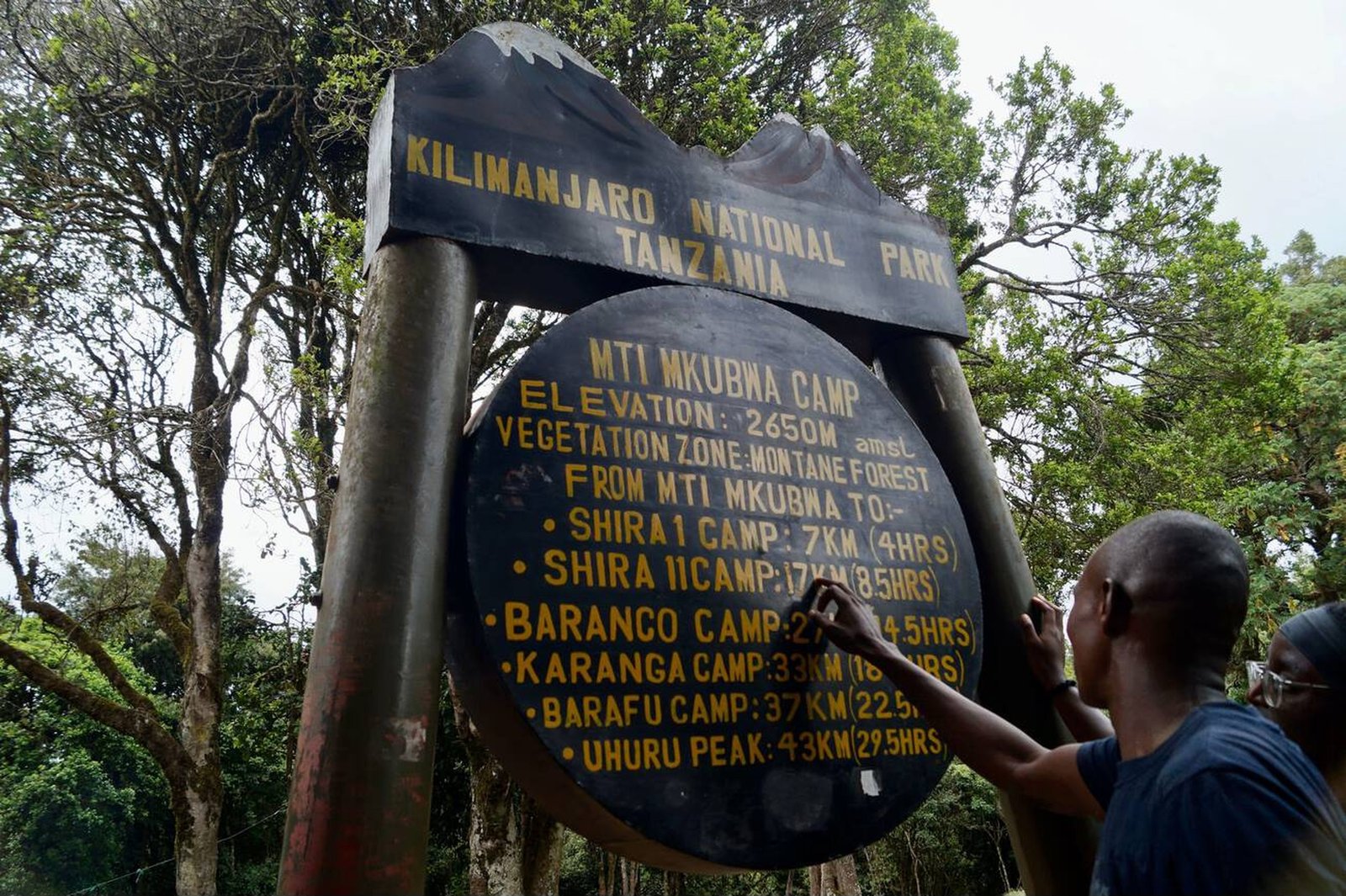
Day 1 of Hiking Kilimanjaro Mti Mkubwa Camp
How Should I Train to Climb Kilimanjaro?
A moderate fitness level is key to a comfortable and successful Kilimanjaro climb. This means you should be able to run 5 km (3 mi) without difficulty and hike 10 km (6+ mi) in a day. The best ways to train include swimming, cycling, running, and hiking. See our Kilimanjaro training plan for a detailed guide.
Altitude Sickness and the Dangers of Climbing Kilimanjaro
The biggest risk on Kilimanjaro is acute mountain sickness caused by poor acclimatisation. In severe cases, it can lead to cerebral or pulmonary oedema, both life-threatening conditions that cause about ten deaths per year on the mountain. Explore more facts about mortality on the mountain in our Mt Kilimanjaro death statistics article.
Fortunately, AMS is easy to prevent. Choose a seven-day or longer itinerary, stay hydrated, and walk slowly to allow proper altitude adaptation. Guide expertise is crucial — choose an operator whose Kilimanjaro guides are certified Wilderness First Responders, trained to handle emergencies and evacuations. For more details, check our acclimatisation on the Kilimanjaro article.

Sunrise view of Mount kilimanjaro from Shira 1 camp
Expert Opinion
Do not underestimate Kilimanjaro: 5,895 meters (19,341 ft) is a serious height. Poor acclimatization can cause high-altitude sickness. Sadly, tragedies happen each year. The primary cause is choosing low-cost operators. They use substandard equipment, while their unqualified guides lack first aid and emergency management skills.
Can You Recommend Reliable Travel Insurance to Climb Kilimanjaro?
At Kilisherpas Travel, safety is engineered into every expedition. For high-altitude climbs such as Mount Kilimanjaro (5,895 m), we strongly recommend partnering with Global Rescue, a globally recognized provider of field rescue and evacuation services trusted by professional expeditions and organizations worldwide.
Unlike traditional travel insurance, Global Rescue operates a direct-response model. In the event of illness, injury, or emergency, they coordinate and fund rescue operations in real time, rather than reimbursing costs afterward.
How Do I Get to Mount Kilimanjaro?
The easiest way to reach Mt Kilimanjaro is by flying into Kilimanjaro International Airport (JRO) in Tanzania. From there, it's a 1-hour and a half drive to Arusha, where most climbs begin. Major airlines such as Turkish Airlines, Qatar Airways, KLM, Ethiopian Airlines, and Air France offer flights to JRO.
Alternatively, you can fly into Dar es Salaam and take a local flight to Kilimanjaro, though this may come with extra costs for domestic flights and baggage fees. Another budget-friendly option is to fly into Nairobi, Kenya, and take a bus to Arusha, but keep in mind the additional costs of a Kenyan transit visa ($21) and the bus transfer ($45), with a total journey time of about seven hours.

Sunrise on the top of kilimanjaro
Discover What Makes Kilimanjaro Famous
Famous For
Mount Kilimanjaro is the highest mountain in Africa and the tallest free-standing volcano in the Eastern Hemisphere. It is a UNESCO World Heritage Site and one of the prestigious Seven Summits. The mountain is also one of the few places in Africa where glaciers can still be seen.
History
The first successful ascent of Mount Kilimanjaro was recorded in 1889 by Hans Meyer and Ludwig Purtscheller. In 1927, Sheila McDonald became the first woman to reach the summit.
Biodiversity
Kilimanjaro is home to approximately 3,000 species of plants, insects, and birds, including many endemic species found nowhere else on Earth.
Climate Zones
The mountain features five distinct climate zones: rainforest, heather, moorland, alpine desert, and the arctic summit. Each zone offers a unique landscape and ecological experience as climbers ascend.
Weather and Trail Conditions on Kilimanjaro: Rainy vs Dry Seasons
Tanzania has two rainy seasons and two dry seasons. The short rainy season begins in early November and lasts until late December. It is followed by the dry season, which lasts until mid-March. Then the season of long rains begins, ending in mid-June. You should consider the northern slopes to climb Kilimanjaro during the rainy season. According to the data we received from the Tanzania Meteorological Authority, this part of the mountain receives five times less rainfall. Good Kilimanjaro routes to choose from are Rongai, Northern Circuit, and Marangu.
How Long Does It Take to Summit Kilimanjaro?
Reaching the summit of Mount Kilimanjaro is not a race against the clock but a gradual ascent through changing climates and thinning air. The shortest itineraries take about 5 days, though most climbers spend 6 to 8 days on the mountain to allow their bodies to adjust to the altitude. Longer routes significantly improve acclimatisation and increase the likelihood of standing on the roof of Africa. Some extended itineraries, including those that spend a night inside the crater near the summit, can last ten days or more. For a detailed breakdown of routes and daily trekking schedules, see how long it takes to climb Kilimanjaro.
Kilimanjaro Group Climbs: 2026–2030 Departures
Jamie
OnlineReady to Plan Your Kilimanjaro Climbing Adventure?
Contact us. Our team is always here to help.
FAQs
Get answers to the most common questions about climbing Africa's highest peak
Kilimanjaro has been summited every day of the year. We have scheduled climbs every week, year-round. If you have a particular event or day you would like to be standing on the summit, we will arrange that. The following provides detail on average monthly temperatures (at the beginning of the climb, not on the upper mountain) and rainfall:
MonthJanuary | Avg. Temp. (F ~ C)78° ~ 26° | Rainfall (inches ~ cm)1.4 ~ 3.6 |
|---|
You can overpay to Kilisherpa's Travel, and you can underpay.
Cheap operators may sacrifice:
Safety equipment
Contract out your climb to unknown companies
Non-certified guides with no medical training
Neglect proper cooking preparations
Exclude private sanitary facilities
Poor group equipment
Select quick and crowded routes
The list can go on and on….
Overpriced operators pay a hefty premium for top internet ad space, include unnecessary days on and off the mountain, mail costly promotional material, or simply charge thousands more to elicit an increased sense of security and/or comfort.
Compare Kilisherpa's travel to ANY overpriced operator, and we guarantee to offer more services, safety and summit success, all at a better value.
Depending upon the selected route, you may trek an average of 4-8 hours per day with the summit day being the longest.
Kilisherpas Travel provides a detailed equipment list in the welcome package that ensures every detail and item is in order.
Yes. With our ON-SITE Rental Shop in Arusha, Kilisherpas Travel rents anything from sleeping bags to warm jackets down to trekking poles and gaiters. If you currently don’t have items on the Equipment List and feel it would be better to rent, simply reserve these items and we’ll have them ready for you upon arrival.
The only items you will carry are the essentials you want while trekking that particular day. Our detailed Kilimanjaro Information Guide will provide gear and suggestions on optimising your daypack.
No other company provides more safety equipment than Kilisherpas Travel. From emergency oxygen to altitude bags, portable stretchers to pulse oximeters, you are in good hands should the rare occasion arise that these safety devices are needed. Each lead guide is certified for the usage and handling of all our safety equipment.
typhoid,While there are no current restrictions for non Africans entering Tanzania, you should however check with your local travel clinic for the latest recommendations. We highly recommend you are up to date with your Hepatitis A & B, Typhoid, and tetanus.
For current health information for Travels to Tanzania, visit the Center for Disease Control website.
The majority of those climbing Kilimanjaro and/or travelling on safari fly into Kilimanjaro International Airport (Airport Code: JRO). Some find it more economical flying to Nairobi, Kenya (Airport Code: NBO), and then taking the 6-8 hour shuttle transportation to Arusha or Moshi.
Our hotels have a safe room that stores all baggage and equipment not needed for the climb or safari.
Kilisherpas Travel provides a detailed fitness programme based on your time before departure, the altitude you live at, your age, and your fitness level. Kilisherpas Travel offers a comprehensive personal fitness programme to ensure your condition prior to taking your first step on the mountain.
The majority of our clients have not been at high altitude before and do not know how their body will react. Diamox (generic name Acetazolamide) is a carbonic anhydrase inhibitor, which means it forces the kidneys to expel bicarbonate, thus re-acidifying the blood. The drug forces the kidneys to emit bicarbonate. By increasing the amount of bicarbonate removed to the urine, the blood becomes more acidic. Acidifying the blood stimulates ventilation, which increases the amount of oxygen in the blood and has been shown to decrease the detrimental effects of altitude on the body.
This is a personal choice and has been known to assist clients with minimising the effects of altitude.
This should ultimately be a decision between you and your physician.
Tanzania’s official languages are English and Swahili.
All Kilisherpa guides speak English, with some of our guides conversant in French, German, Italian, and Spanish.
Yes. We strongly recommend it.
Many of our climbers choose Global Rescue because it specializes in high-altitude field rescue and medical evacuation – essential for Kilimanjaro.
Global Rescue covers:
Field rescue & emergency medical evacuation (High-Altitude package required)
24/7 medical advisory & travel assistance
Destination reports & alerts
The visa to enter Tanzania is USD $100 for US citizens and $50 for all others. These can be purchased upon arrival at Tanzania Airports or at the Kenya/Tanzania border or online prior to arrival at www.immigration.go.tz in US cash or Tanzanian shillings ONLY. Ensure your passport is valid for at least 6 months from the entry date into Tanzania.
The Tanzanian shilling is the national currency. US dollars are widely accepted throughout Moshi and Arusha and park entrances throughout the safari. There are also many currency exchange locations and banks to facilitate currency trade throughout Moshi and Arusha.
Credit cards are only accepted at the airlines and major hotels within Tanzania. Plan on travelling with sufficient US dollars.
We understand that sufficient caloric intake and purified water are essential to keep the body functioning properly high up on the mountain. Our menu is specific to the activities of that day and the day of trekking ahead. By incorporating the right balance of carbohydrates and proteins, we keep our clients in top health.
We have vegetarian & vegan menus available and accommodate gluten-free and do our best with other special dietary situations. The following is a sample of our menu items:
Breakfast
Tea, Coffee, Hot Chocolate
Toast, Biscuits with Margarine, Jam, Peanut Butter
Eggs, meat, sausage
Porridge
Fresh fruits: Mango, Banana, Avocado, Watermelon, Oranges
Lunch
Tea, Coffee, Hot Chocolate
Chicken or Vegetable Soup
Bread, Biscuits or Pancakes with Jam, Peanut Butter
Sandwich with Meat or Cheese, Boiled Egg
Snack: Peanuts, Popcorn, Cake, Cookies
Fresh fruits and Fruit Salad: Tomato, Cucumber, Onion, Carrots
Dinner
Tea, Coffee, Hot Chocolate
Chicken or Vegetable Soup
Bread, Biscuits or Pancakes with Jam, Peanut Butter
Roasted Chicken, Beef or Fish
Potatoes, Rice, Pasta
Fresh Vegetables: Carrots, Peas, Tomatoes, Beans
Kilisherpa'sWelcome Packet: including Detailed Itinerary, Invoice, Information Guide, Equipment List, Personalized Fitness Training program, Kilimanjaro Journal, warm Summit Cap.
Personal trekking coordinator to assist throughout your preparation
Transport to and from Kilimanjaro Airport
Private Toilet Included
2 Nights Hotel
Breakfast at Hotel
Daily trip reports our office staff emails back home to interested friends and family
Transportation to and from your selected route
All personal and group tents
All Tanzanian National Park Fees
Government Climbing Taxes
Climbing permits
All Meals while on Kilimanjaro and Safari
Sleeping pads
Private chemical toilets
Staff Salaries
All meals during the duration
Purified water
Kilisherpas exclusive Guides, Assistant Guides, Chefs and Porters
Safety Equipment:
Emergency Oxygen
Hyperbaric Bag
Pulse Oximeter
Hot drinks at every meal
One tree planted on your behalf
Free wireless internet at the hotel
Personal Summit Certificate signed by the National Park
Kilisherpas Travel exclusive Guarantee
Absolutely. Kilisherpas Travel has led Special Olympians, paraplegics, visually impaired people, amputees, and many other clients with special needs to the summit. Please contact us to discuss specific situations and for any questions you may have.
No, in the sense that no prior climbing experience is needed. However, this should not lead to the notion that this is a simple hike. The Kilisherpas' personal fitness programme will prepare your body and mind for the daily trekking and rigours of the mountain.
On Kilimanjaro and safari, tipping is an expected practice for the crew who assist you.
As a general rule, USD $350 to USD $500 per person will adequately cover crew tips on the mountain. For Safari, USD $25 per person per day is recommended. Several factors can increase or decrease the per-person amounts, such as longer expeditions, which will increase the overall amount, as well as smaller groups, which typically will tip more, as they will employ a larger number of crew per customer ratio than larger groups. The tip can be given to the lead guide the final night or the following day at the end gate. Your lead guide will appropriately distribute it to your mountain crew.
You can confirm your booking via our secure online reservation form. We’ll send out your Welcome Package soon, and you’ll be on your way!