Preparing for your Kilimanjaro expedition involves more than just choosing the right route and packing your gear. One common question among climbers is whether specialised traction devices like crampons or microspikes are necessary for the ascent. At Kilisherpas Travel, we prioritise safety and comfort, guiding you on the essential equipment needed for a successful climb. In this article, we’ll clarify the roles of crampons and microspikes, when they are required, and how to ensure you’re adequately prepared for varying weather conditions on Kilimanjaro.
Do You Need Crampons or Microspikes on Kilimanjaro?
Understanding Crampons and Microspikes
Both crampons and microspikes are traction devices designed to improve grip on icy or slippery terrain, but they serve different purposes and are used in different mountaineering contexts.
What Are Crampons?
Crampons are heavy-duty, metal frames with sharp, wedge-shaped spikes that attach securely to mountaineering boots. They are essential for technical ice climbing and steep snow slopes, providing exceptional traction on vertical or near-vertical icy surfaces. Crampons typically feature 10 to 14 points that bite into ice and hard snow, making them indispensable for high-altitude mountaineering.

14 wedge-shaped crampon points by Kilisherpas Travel
Are Crampons Necessary on Kilimanjaro?
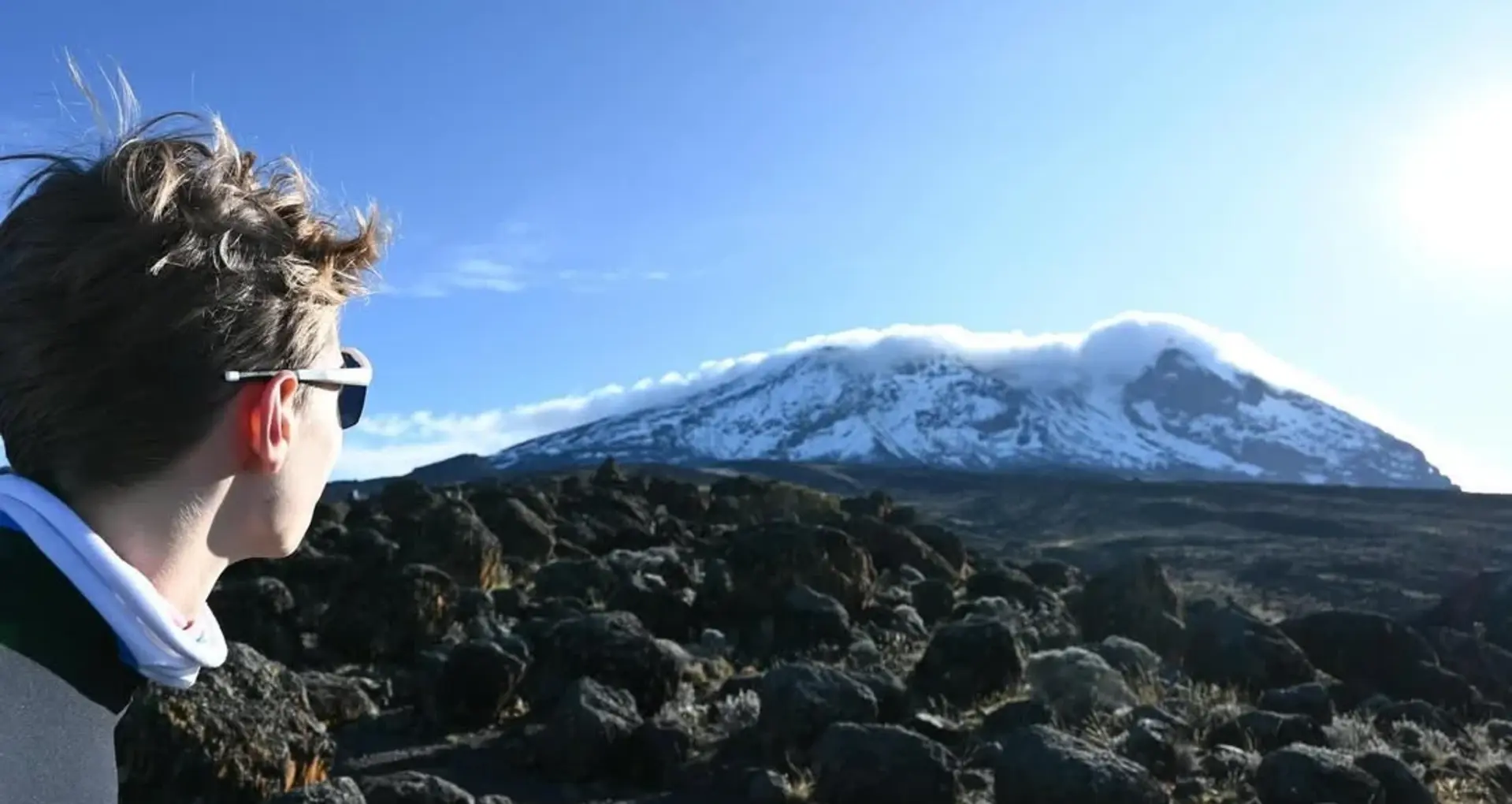
Absolutely not. The main routes leading to Kilimanjaro’s summit traverse rocky terrain, scree slopes, and glacier-free zones. There are no steep icy slopes or vertical ice walls that require the use of crampons. Therefore, full crampons are unnecessary and not recommended for Kilimanjaro expeditions.
When Are Microspikes Recommended?
What Are Microspikes?
Microspikes are lightweight, flexible traction devices made of small metal spikes connected by chains or rubber frames. They are designed to slip over hiking or trekking boots, providing extra grip on icy or slick surfaces. Sometimes called "mini-crampons", microspikes are ideal for moderate icy conditions, slushy snow, or wet, rocky terrain.
Why Carry Microspikes on Kilimanjaro?
Although Kilimanjaro’s main routes are generally free of ice, weather conditions can change rapidly, especially during the rainy season (October to early June). During these periods, snow and ice can cover sections of the trail, making footing slippery and increasing the risk of slips and falls.
Best Times to Use Microspikes
Rainy season (October to June): Snow and ice are more prevalent; microspikes significantly improve traction.
Early morning summit attempts: Trails can be icy or slushy after overnight freezing or rain.
Slippery rocks or wet terrain: Microspikes help maintain stability on wet, uneven surfaces.
Practical Tips:
Most climbers carry microspikes just in case, especially during the rainy season. They are lightweight and easy to pack, and rental options are available through Kilisherpas Travel, saving you the expense of buying them outright.
Practical Advice for Your Kilimanjaro Climb
Should You Buy or Rent?
If you don’t own microspikes, renting from Kilisherpas Travel’s gear warehouse is a convenient and cost-effective solution. We stock high-quality, well-maintained microspikes suitable for Kilimanjaro conditions, along with other essential gear.
Additional Safety Tips:
Always pair microspikes with trekking poles for optimal balance.
Check weather forecasts before your climb to anticipate icy conditions.
Use microspikes only on suitable surfaces; avoid walking on dry, rocky terrain with spikes to prevent damage.
Final Thoughts
While crampons are unnecessary for Kilimanjaro’s routes, microspikes are a valuable piece of gear during the rainy season or when icy conditions develop unexpectedly. Proper preparation and the right equipment can make a significant difference in safety and confidence on the mountain.
At Kilisherpas Travel, we’re committed to equipping you with the best gear and expert advice to ensure your Kilimanjaro adventure is memorable, safe, and successful. Contact us today to learn more about gear rentals and our comprehensive trekking packages.