How Was Mount Kilimanjaro Formed? A Complete Geological History
Mount Kilimanjaro stands as Africa’s highest peak and one of the continent’s most iconic natural wonders. Its towering presence, snow-capped summit, and diverse ecosystems have fascinated explorers, scientists, and travellers for centuries. But have you ever wondered how this majestic mountain came into existence? In this detailed guide, Kilisherpas Travel explores the geological origins of Kilimanjaro—its formation, volcanic history, and the ongoing processes that shape this "Roof of Africa. " Prepare for an in-depth journey into the mountain’s volcanic and tectonic past.
The Formation of Mount Kilimanjaro: A Tectonic and Volcanic Tale
The Role of Tectonic Plate Movements
Mount Kilimanjaro is located in the East African Rift Valley, a zone where the African tectonic plates are diverging. Specifically, it lies at the junction where the Nubian and Somali plates—subdivisions of the African Plate—are pulling apart. Millions of years ago, this rifting process was the catalyst for the mountain’s birth.
Historically, the African continent was a single, unified landmass. Over time, tectonic forces caused the continent to split along the rift valley, creating a zone of weakness in the crust. As the plates continued to diverge, magma from beneath the Earth’s surface began to push upward, leading to volcanic activity that formed the mountain’s core structures.
The Birth of the Volcanic Cones
Kilimanjaro is composed of three main volcanic cones—Shira, Mawenzi, and Kibo—each representing different stages of volcanic activity:
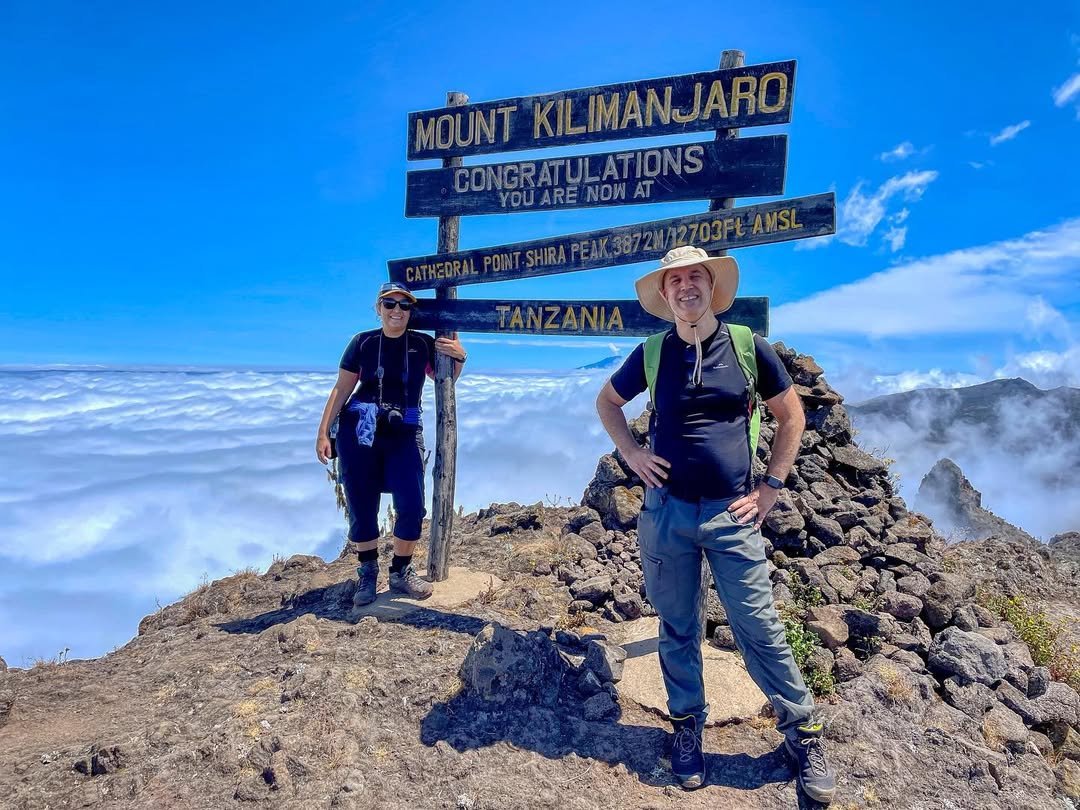
Shira: The oldest and now extinct volcano, Shira, began forming around 2 million years ago. It was the first cone to emerge from the rift, built from successive lava flows and ash deposits. Over time, erosion and volcanic activity diminished its prominence, leaving behind a broad plateau at approximately 3,600 meters (11,811 feet). Its highest point, Jonsell Point, reaches 3,962 meters (12,996 feet).
Mawenzi: The second cone, Mawenzi, emerged roughly 1.3 million years ago. It is characterised by rugged, steep slopes and jagged peaks, with its highest point reaching 5,149 meters (16,892 feet). Named after a legendary figure in local traditions, Mawenzi remains a prominent, dramatic feature of Kilimanjaro’s landscape.
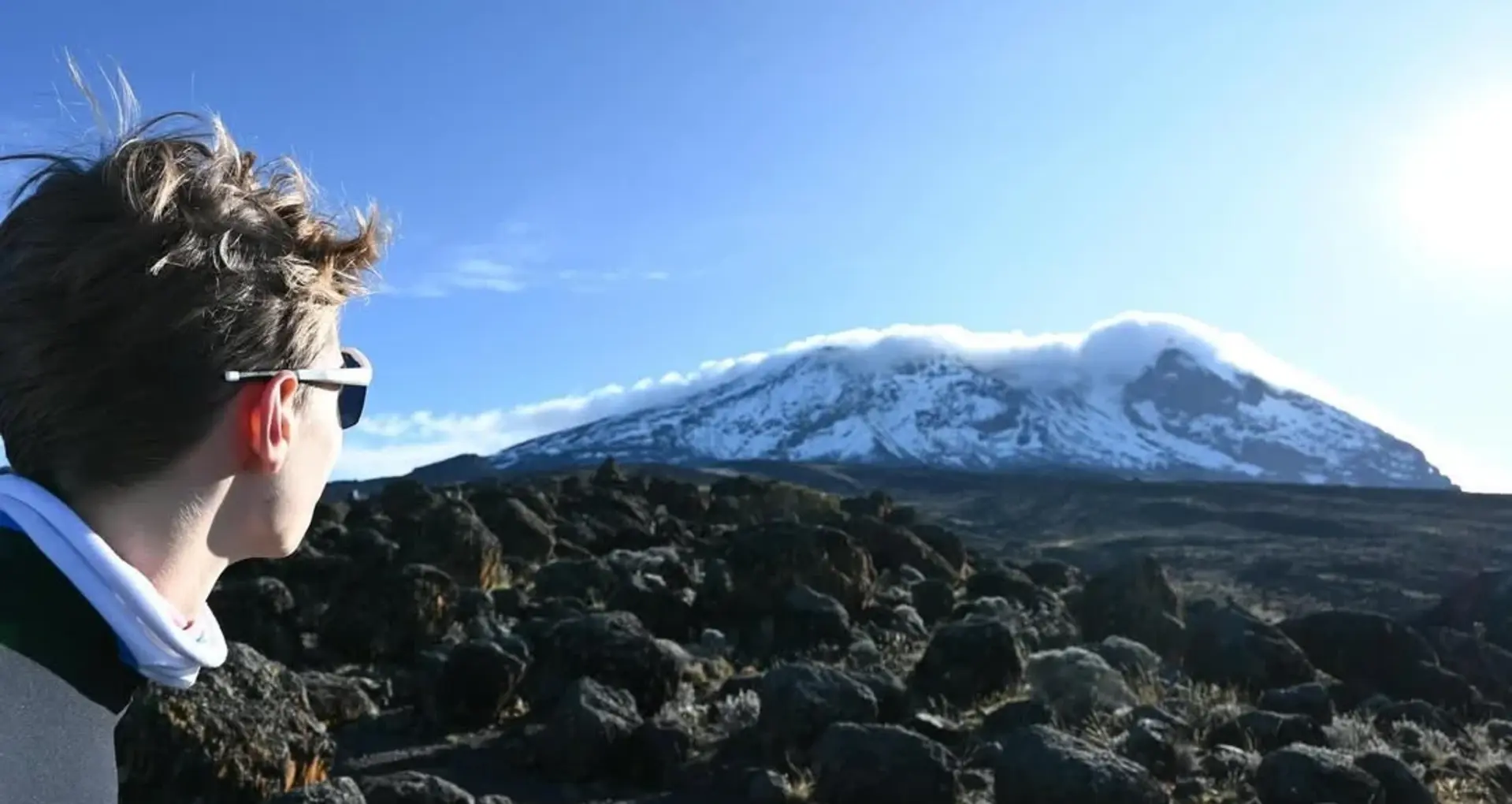
Kibo: The youngest and highest of the three, Kibo formed approximately 460,000 years ago. It is the focal point of modern climbers, as it hosts Uhuru Peak—the summit at 5,895 meters (19,340 feet). Unlike the other cones, Kibo still contains glaciers and fumaroles, indicating its potential for future volcanic activity.
The Geology of Kilimanjaro: Rocks, Lava, and Glaciers
Composition and Volcanic Materials
Kilimanjaro's volcanic structure is primarily composed of basalt and andesite—magmatic rocks formed from cooled, solidified lava. Basalt, which makes up the bulk of the mountain, is dark grey and forms from rapidly cooled lava flows. Andesite, a more viscous volcanic rock, is prevalent near the summit and in the crater regions.
Unique Volcanic Features
Obsidian: On the slopes of Kibo, relics of volcanic activity include obsidian—a glassy volcanic rock that forms when lava cools rapidly. Its smooth, black surface adds to the mountain’s rugged beauty.
Fumaroles and Gas Emissions: Although Kilimanjaro is classified as dormant, fumaroles near the summit still release gases such as sulphur dioxide and carbon dioxide, signalling residual geological activity beneath the surface.
Is Kilimanjaro Still Volcanically Active?
While Kilimanjaro is considered a dormant volcano, it is not extinct. Its last eruption occurred approximately 360,000 years ago, and the mountain still exhibits signs of geological activity through gas emissions. The presence of fumaroles indicates that magma remains beneath the surface, but the likelihood of an eruption in the near future is extremely low.
Potential for Future Eruptions
Current scientific consensus suggests that Kilimanjaro’s volcanic activity has significantly waned, and it is unlikely to erupt again. Nonetheless, its geological history and signs of residual activity make it a fascinating subject for ongoing research.
The Origin of the Name "Kilimanjaro"
The name “Kilimanjaro” has several theories of origin:
Swahili Roots: It possibly derives from “kilima” (mountain) and “njaro” (shining or whiteness), referring to the snow-capped summit.
Chagga Heritage: Alternatively, it may come from the Chagga people, who inhabit the mountain’s slopes, with possible meanings like “mountain of caravans", alluding to ancient trade routes passing through the region.
Conclusion
Mount Kilimanjaro’s majestic presence is the result of complex geological processes involving tectonic plate movements, volcanic activity, and erosion. From its formation over two million years ago to its status today as a dormant stratovolcano with active fumaroles, Kilimanjaro’s history is a testament to the dynamic forces shaping our planet. Whether you’re an avid climber, geology enthusiast, or curious traveller, understanding the mountain’s origins deepens appreciation for this natural wonder.
Plan your adventure today with Kilisherpas Travel and explore the awe-inspiring landscapes shaped by millions of years of geological history.