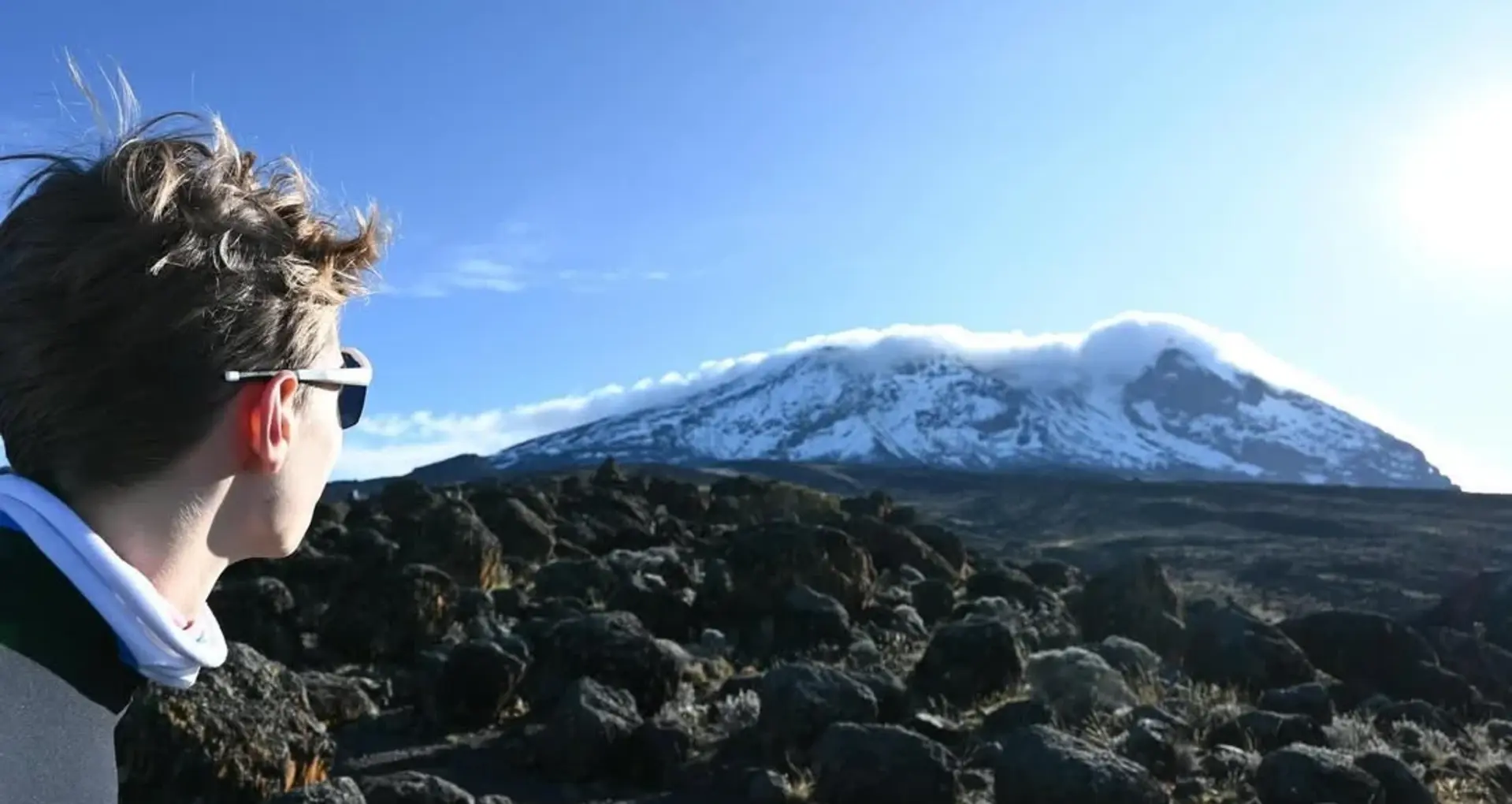
Standing at 5,895 meters (19,341 feet), Mount Kilimanjaro is Africa’s tallest peak and one of the world’s most iconic mountains. What makes a climb of Kilimanjaro uniquely fascinating is the dramatic variation in climate zones you encounter on your ascent. From lush rainforests teeming with wildlife to barren alpine deserts and finally, snow-covered glaciers at the summit, Kilimanjaro offers a journey through vastly different ecosystems. In this comprehensive guide, Kilisherpas Travel explores all five of Kilimanjaro’s distinct climate zones, sharing insights on what to expect in each and how to prepare for the changing conditions.
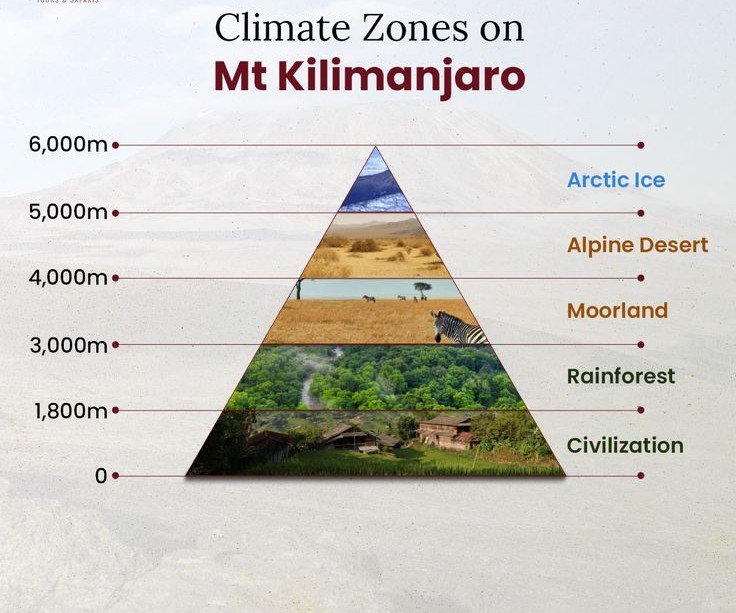
The Five Climate Zones of Kilimanjaro
The mountain’s ecological diversity is divided into five main climate zones. Each zone presents its own landscape, flora, fauna, weather patterns, and challenges, transforming the climb into a spectacular journey through the natural world.
1. Cultivated Zone
Altitude: 800–1,800 meters (2,625–5,905 feet) Landscape & Features: This is the lowest and warmest zone, characterised by cultivated farmland, villages, and lush vegetation. The rich volcanic soil supports crops such as maize, bananas, and especially Tanzanian coffee, known for its flavour and quality.
Weather & Climate: Daytime temperatures are warm, ranging from +21°C to +32°C (+70°F to +89°F). Nights are comfortable, with temperatures between +15°C and +27°C (+59°F to +81°F).
Wildlife & Vegetation: Expect to see blue monkeys, bushbabies, genets, civets, hornbills, squirrels, and mongooses. Birdwatchers can spot sunbirds, mousebirds, and shrikes. Livestock like Zebu cattle also graze the area.
Travel Tips: Climbers often start their ascent after resting in nearby towns. During warmer months, light clothing such as T-shirts and shorts suffice; cooler evenings require a jacket. The area offers scenic waterfalls, with Materuni Falls being a popular excursion.
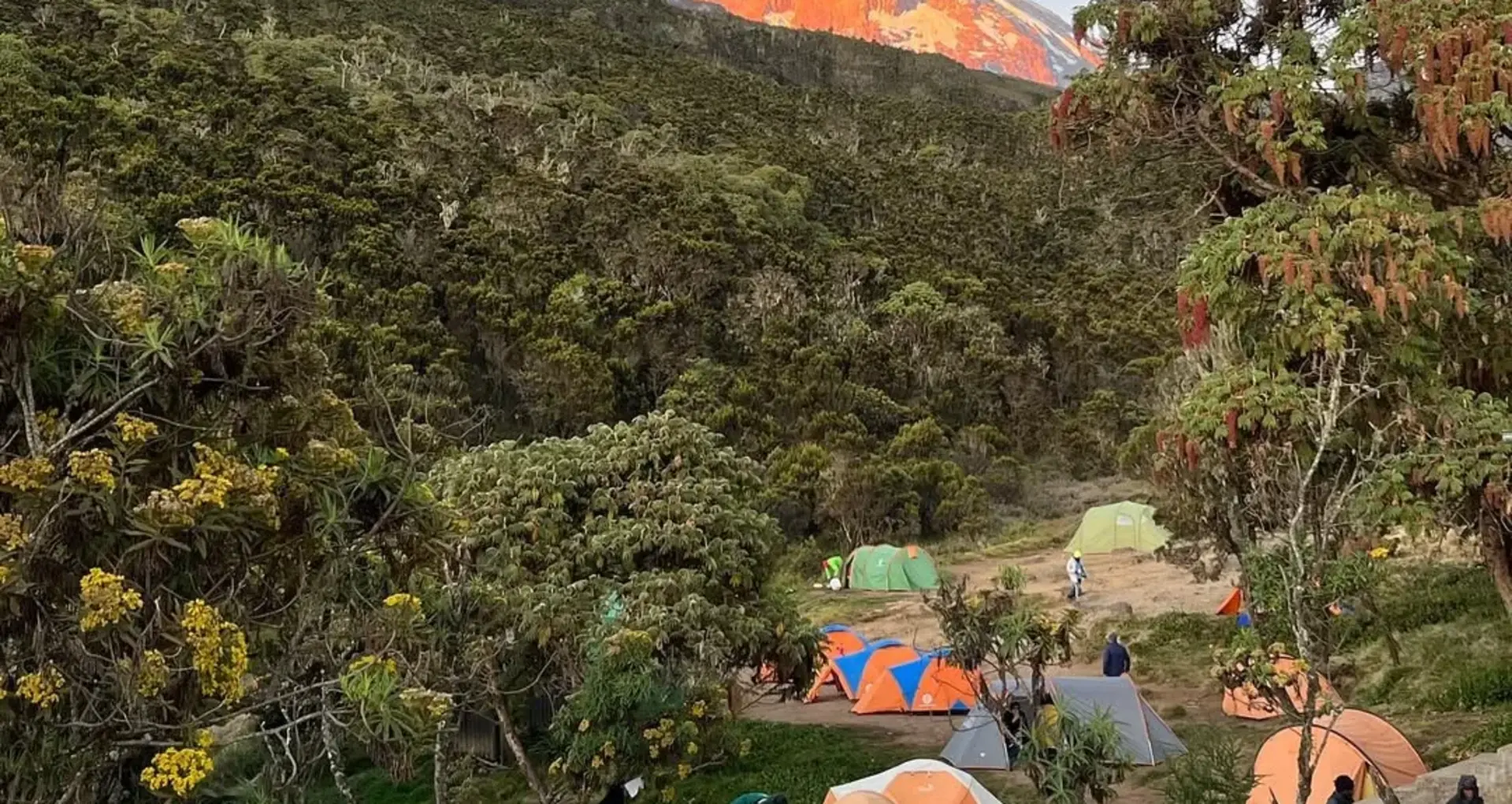
2. Rainforest Zone
Altitude: 1,800–2,800 meters (5,905–9,185 feet) Landscape & Features: This lush, dark-green forest marks the start of Kilimanjaro’s protected wilderness within Kilimanjaro National Park. The dense vegetation is home to Africa’s tallest trees, including Entandrophragma excelsum, which can reach 81.5 metres (267 feet).
Weather & Climate: Annual rainfall can reach up to 2,000 mm (80 inches), with the wettest months bringing frequent rain. Temperatures range between +15°C and +20°C (+59°F to +68°F) during the day and +4°C to +15°C (+39°F to +59°F) at night.
Wildlife & Vegetation: Diverse animals such as black-and-white colobus monkeys, honey badgers, bushpigs, and forest antelope thrive here. Bird species include Kilimanjaro White-eyes and Hartlaub's Turaco. The forest is also home to elusive predators like leopards and civets.
Travel Tips: Expect humid conditions with frequent fog. Wear moisture-wicking clothing and trekking shoes, and be prepared for muddy or slippery terrain. The rainforest is the first stage of ascent and the last during descent.
3. Heather and Moorland Zone
Altitude: 2,800–4,000 meters (9,185–13,125 feet) Landscape & Features: This zone features open moorlands dotted with giant heather bushes, tall lobelias, and the endemic Kilimanjaro groundsels (Dendrosenecio kilimanjari). The landscape is marked by volcanic rocks, boulders, and marshy patches on the Shira Plateau.
Weather & Climate: Day temperatures range from +10°C to +21°C (+50°F to +70°F), with nights dropping to -1°C to +10°C (+30°F to +50°F). The area often experiences clouds and fog, especially above 3,000 metres.
Wildlife & Vegetation: Large mammals like elands, buffaloes, and occasional elephants can be seen migrating through this zone. Birdlife includes raptors such as augur buzzards, crowned eagles, and bearded vultures.
Travel Tips: Bright sunlight and high altitude demand sun protection—sunglasses, hats, and sunscreen are essential. Layered clothing helps manage temperature fluctuations, and sturdy boots are recommended for rocky terrain.
4. Afro-alpine Desert Zone
Altitude: 4,000–5,000 meters (13,125–16,405 feet) Landscape & Features: This rugged, rocky zone is characterised by moss-covered stones and almost devoid of vegetation. The terrain resembles a lunar landscape, with sharp rocks and minimal plant life.
Weather & Climate: Day temperatures can reach +25°C (77°F), but nights are frigid, dropping to -12°C to +4°C (+10°F to +39°F). Expect strong sun during the day and extreme cold at night.
Wildlife & Vegetation: Few animals inhabit this zone permanently. Migrant species like elands and leopards may pass through, but sightings are rare. Insects and some birds such as ravens and raptors can be observed.
Travel Tips: Rocky, sunny, and cold conditions require UV-protective clothing, hats, and layered insulating gear. Prepare for intense sun exposure and potential symptoms of altitude sickness.
5. Arctic Zone (Summit)
Altitude: 5,000–5,895 meters (16,405–19,341 feet) Landscape & Features: The summit is a frozen, icy wilderness with glaciers, snowfields, and rocky craters. The Kibo crater is the highest point, with glaciers covering much of the terrain.
Weather & Climate: Temperatures often fall below -30°C (-22°F) at night, with daytime temperatures around -12°C to -4°C (+10°F to +25°F). Snow and ice are perennial, and solar radiation is intense during the day.
Wildlife & Features: No animals reside here. Occasionally, ravens or the frozen carcasses of animals like leopards are found in the glaciers, but sightings of live wildlife are virtually nonexistent.
Travel Tips: Dress in extreme cold-weather gear, including insulated layers, face masks, and goggles. Hydration and sun protection are crucial. This zone requires the utmost caution due to the risk of hypothermia and altitude sickness.
Conclusion
Climbing Kilimanjaro is akin to traversing from the tropical warmth of the lowlands to the icy silence of the summit. Each climate zone offers a unique environment, ecosystem, and set of challenges. Proper preparation, layered clothing, and respect for the mountain’s changing conditions are essential to a successful and safe ascent. Whether you’re captivated by lush rainforests or the icy glaciers, Kilimanjaro’s diverse climate zones promise an unforgettable adventure.
Are you ready to experience Kilimanjaro's incredible ecological journey? Join Kilisherpas Travel for expertly guided climbs that take you through every climate zone, culminating in the breathtaking reward of standing atop Africa’s highest peak.