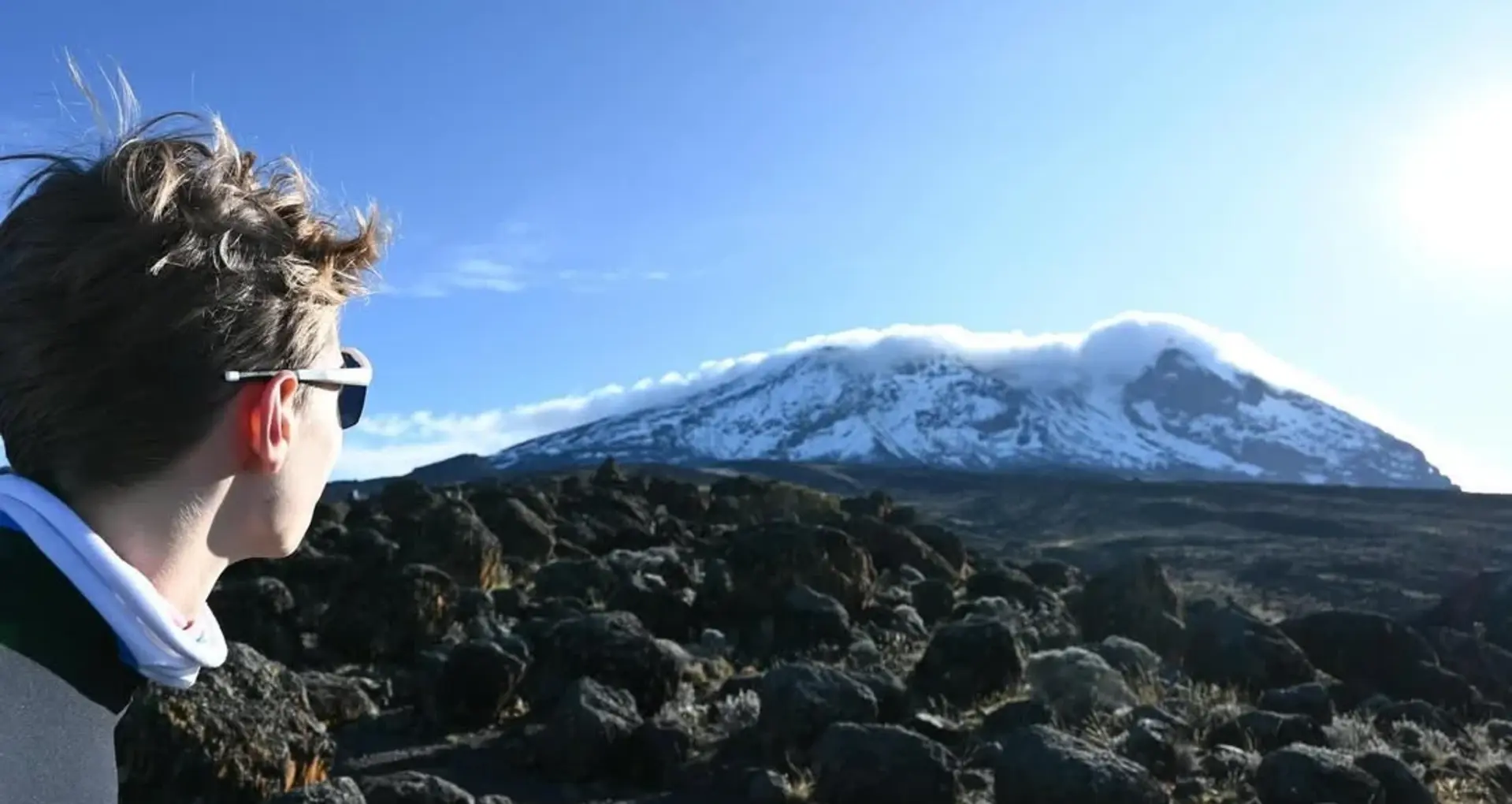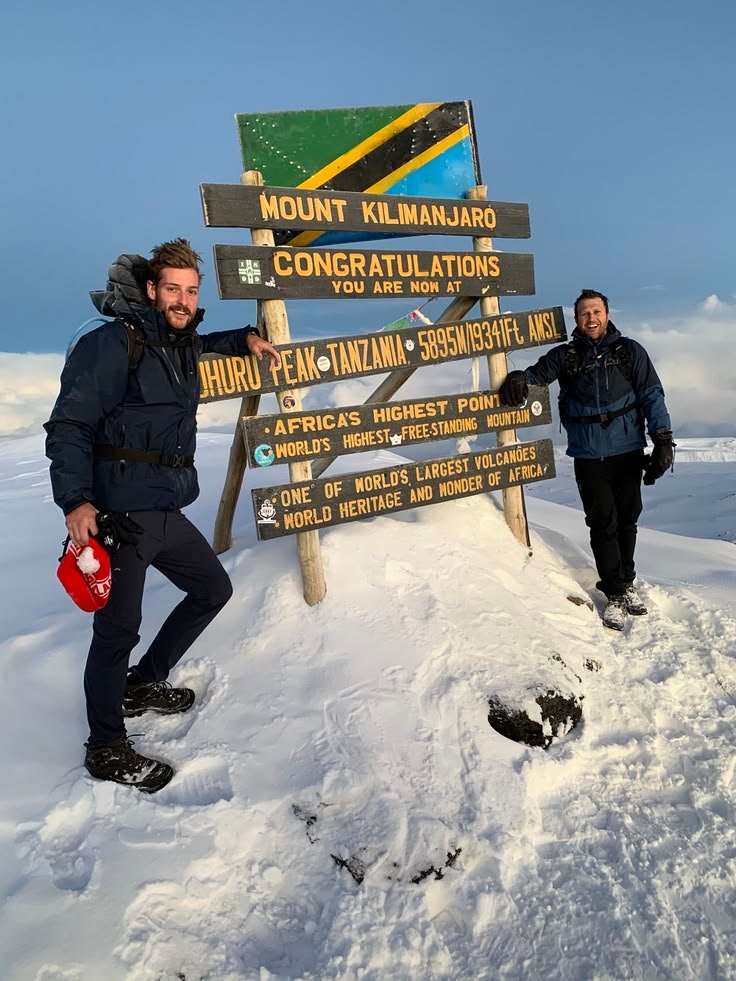
Standing proudly at 5,895 meters (19,341 feet), Kilimanjaro’s summit—Uhuru Peak—is Africa’s highest point and one of the continent’s most iconic natural wonders. As the tallest free-standing mountain in the world, Kilimanjaro offers a spectacular journey through diverse climates, breathtaking landscapes, and rich geological history. In this article, we delve into what makes the summit of Kilimanjaro unique, explore its fascinating geology, and discuss the urgent story of its shrinking glaciers.
The Geology of Kilimanjaro’s Summit
A Dormant Volcano with a Rich History Kilimanjaro is a dormant stratovolcano believed to have formed approximately one million years ago, according to the Geological Society of London. Situated within the East African Rift—a tectonic fissure where magma rises to create volcanoes—this volcanic massif comprises three merged cones: Shira, Mawenzi, and Kibo.
The Three Volcanoes
Shira: The oldest and lowest of the three, now extinct and partially collapsed to form the Shira Plateau on the mountain’s western flank.
Mawenzi: Rising to 5,149 meters (16,893 feet), this rugged cone remains an imposing feature and is considered highly challenging for climbers.
Kibo: The central and tallest cone, home to Uhuru Peak, and the youngest of the three. Its last major eruption occurred hundreds of thousands of years ago, but signs of volcanic activity—such as hot gases and sulphur deposits—continue to be observed near the summit.
Volcanic Activity & Future Though classified as dormant, Kibo’s volcano still exhibits geothermal signs, leading scientists to believe it could erupt again in the distant future. Currently, predictions suggest that Kilimanjaro is unlikely to awaken in the coming millennia, but ongoing geothermal activity keeps it scientifically intriguing.
Climbing Kilimanjaro: From Tropics to Arctic
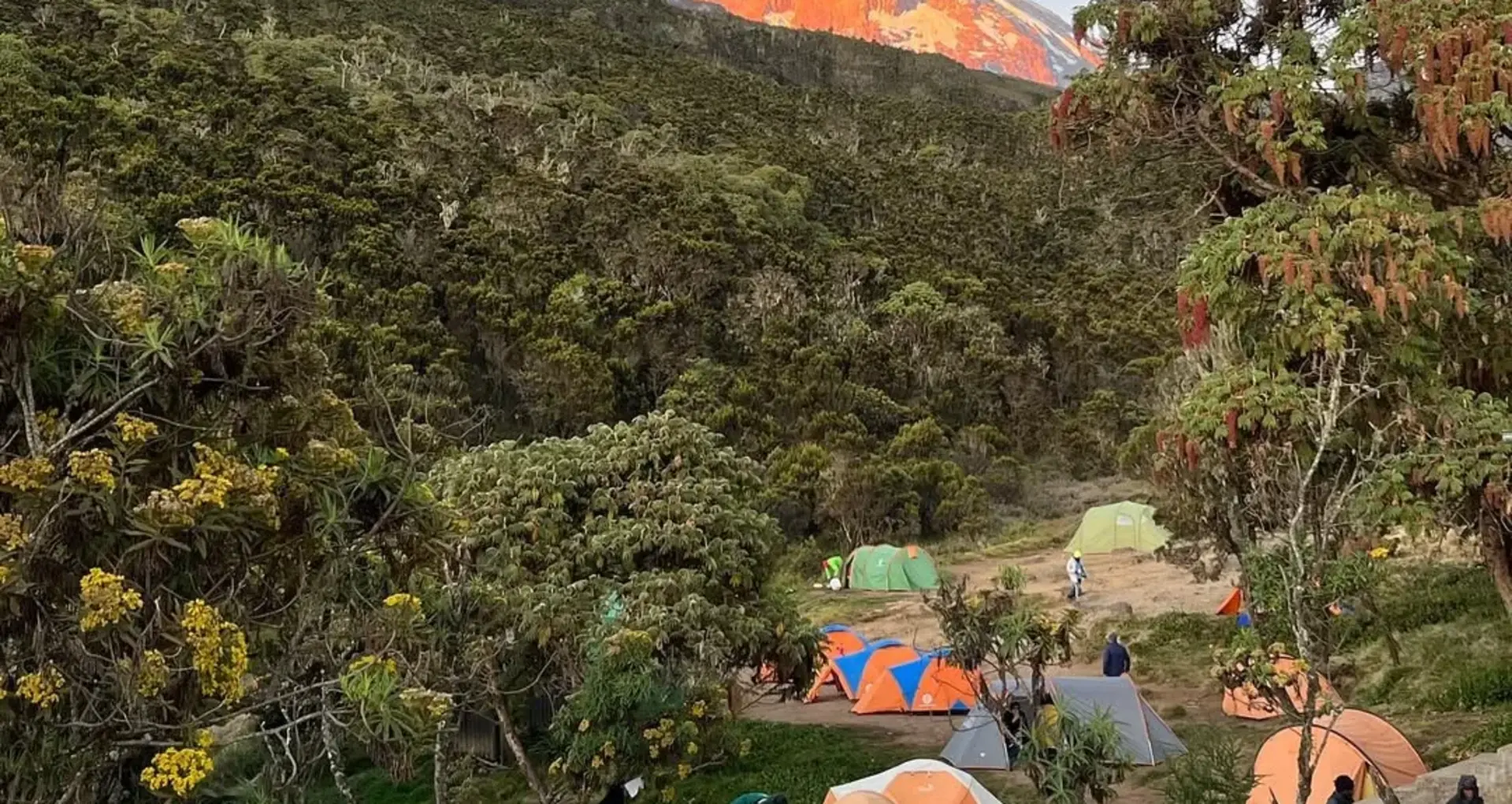
A Journey Across Climate Zones Climbing Kilimanjaro is more than a physical challenge; it’s a voyage through five distinct climate zones:
Cultivated Land: The lush foothills of Tanzania.
Rainforest: A dense, tropical forest teeming with biodiversity.
Heath and Moorland: Open, shrubby landscapes as vegetation thins.
Alpine Desert: Barren, rocky terrain with scarce vegetation.
Arctic Zone: The summit’s icy, snow-covered cap, reminiscent of polar conditions.
This dramatic transition makes Kilimanjaro a unique ecological marvel, attracting adventurers eager to experience wilderness from the tropics to the icy heights.
The Glaciers of Kilimanjaro: Melting Icons
A Vanishing Ice Wonderland: Kilimanjaro's glaciers and snowcap have long symbolised the mountain’s majesty. Ernest Hemingway famously referenced the “Snows of Kilimanjaro” in his writings, capturing the allure of these icy remnants.
A Rapid Disappearance Unfortunately, climate change has dramatically reduced these glaciers. According to glaciologist Douglas Hardy, the glacier area has shrunk by 91% since 1912. Once nearly covering the summit, the glaciers are now scarce, with only small remnants remaining. NASA’s Earth Observatory warns that scientists widely agree the ice will likely vanish entirely by 2060 if current trends continue.
Current Glacial Features Today, two large ice fields—the Northern and Southern Ice Fields—stand on either side of Kibo’s crater. However, they are cracking and retreating: the Northern Ice Field, for instance, split into two parts in 2012, highlighting the rapid pace of melting.
A Limited Window for Witnessing the Glaciers: Travellers today have a limited window—possibly just a few decades—to witness the legendary glaciers of Kilimanjaro before they disappear forever.
The First Ascents and Historical Significance
First Successful Ascent On October 5, 1889, German geographer Hans Meyer and Austrian mountaineer Ludwig Purtscheller became the first documented climbers to reach the crater rim of Kibo and claim the summit. Their achievement marked the beginning of Kilimanjaro’s reputation as a mountaineering icon.
Naming and Colonial Heritage Initially named “Kaiser Wilhelm Peak” in honour of the German Emperor, the summit’s name was changed to “Uhuru Peak” following Tanzania’s independence, with “uhuru” meaning “freedom” in Swahili. This shift symbolised the end of colonial rule and the mountain’s new identity as a symbol of national pride.
Pioneering Women Climbers In 1927, Sheila MacDonald became the first woman to summit Kilimanjaro—an inspiring milestone. Her climb was unplanned, inspired by a safari visit and a chance encounter with mountaineers, illustrating Kilimanjaro’s growing reputation as an accessible yet challenging pinnacle of adventure.
Conclusion
Kilimanjaro’s summit remains a compelling symbol of natural beauty and human resilience. Its geological complexity, ecological diversity, and shrinking glaciers tell a story of ancient volcanic power and modern climate change. For climbers and travellers alike, reaching Uhuru Peak is a profound experience – one that offers breathtaking vistas, a sense of achievement, and a poignant reminder of the urgent need to preserve this iconic mountain for future generations.