Jozani Forest is Zanzibar’s most important natural treasure and the last remaining patch of old-growth tropical forest on the island. Located in the heart of Jozani Chwaka Bay National Park on Unguja Island, this 50 km² (19 sq mi) reserve is a biodiversity hotspot that protects some of Zanzibar’s rarest and most unique wildlife.
A visit to Jozani Forest offers a refreshing contrast to the island’s famous white-sand beaches. Here, you can walk through dense jungle, explore mangrove swamps, and come face-to-face with endangered primates found nowhere else on Earth. For nature lovers and those seeking a deeper understanding of Zanzibar beyond its beaches, Jozani is an essential stop.
Where is Jozani Forest and how to get there?
Jozani Forest lies approximately 35 km (22 miles) southeast of Stone Town, situated between the villages of Chwaka and Kibele.
Travel times:
From Stone Town: 50–60 minutes by car
From Jambiani or Paje Beach: 30–40 minutes
From Nungwi or Kendwa (North): 1 hour 30 minutes – 2 hours
Getting there:
Private taxi or arranged transfer (most convenient)
Rental car (self-drive possible, but roads can be narrow)
Dala-dala (local minibus) – cheapest but slower option
Opening hours: 7:30 AM – 5:00 PM daily (last entry at 4:30 PM)
Contact: +255 777 428 033 | info@jozaniforest.com
What Makes Jozani Forest Special?
Jozani is part of a UNESCO Biosphere Reserve and protects a remarkable variety of ecosystems within a relatively small area:
Dense tropical rainforest
Mangrove swamps and wetlands
Coastal thickets and groundwater forests
This diversity supports many endemic species that have evolved in isolation on the island.
Wildlife You Can See in Jozani Forest
1. Zanzibar Red Colobus Monkey (Endangered)
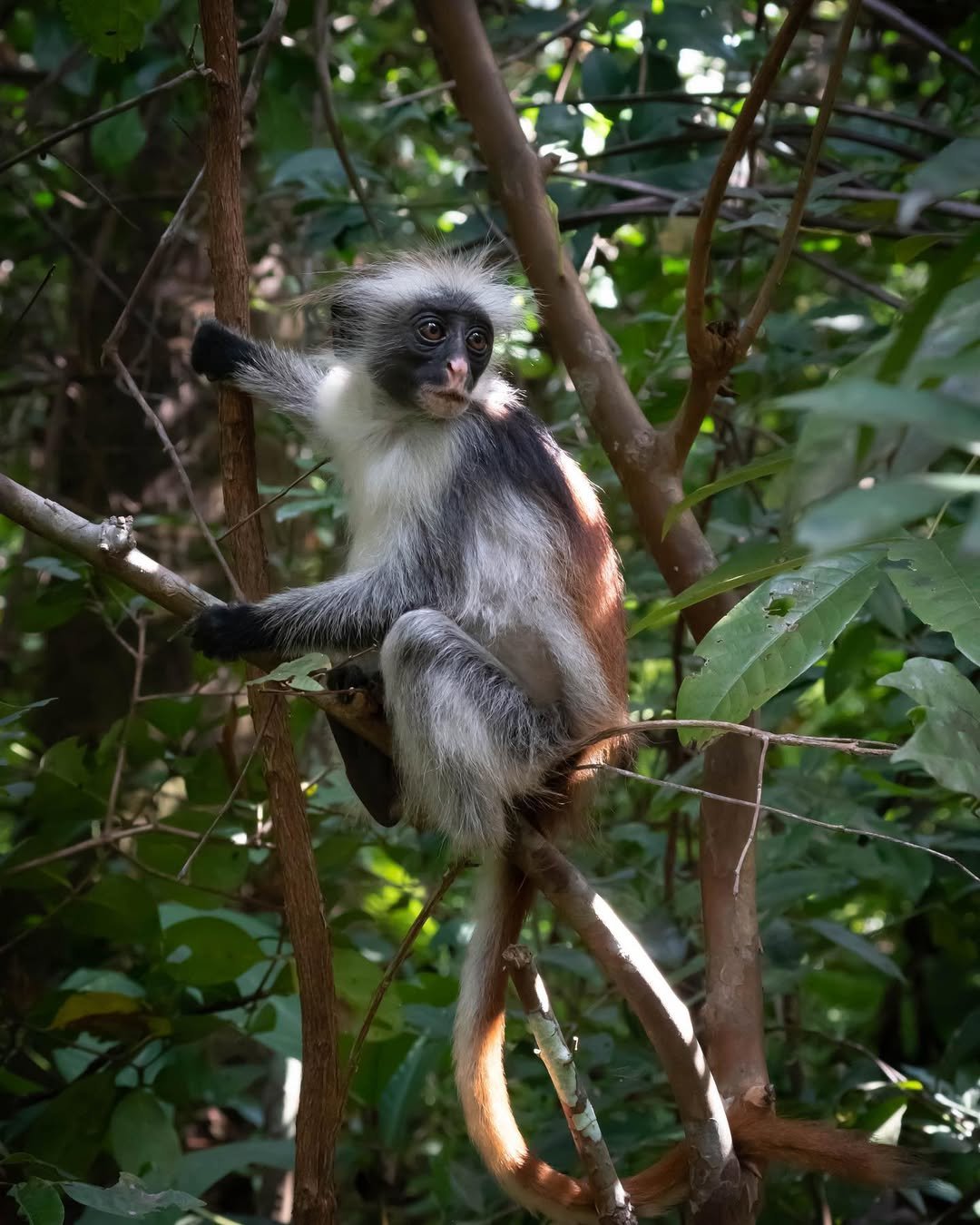
The star attraction of Jozani Forest. These beautiful primates are found only on Unguja Island.
Distinctive reddish-brown fur and long white tails
Expressive dark faces and social behavior
Current population estimated at 5,000–6,000 individuals
Best viewed early morning or late afternoon when they are most active
Maintain a respectful distance of at least 3 meters (10 feet)
2. Zanzibar Sykes’ Monkey
A subspecies of the blue monkey with smoky-grey fur and striking amber eyes. They are shyer than the red colobus and often stay higher in the canopy.
3. Galagos (Bushbabies)
Small nocturnal primates with enormous eyes and incredible jumping ability. You may hear their distinctive “baby-like” cries at dusk, though sightings are more common on night walks.
4. Zanzibar Butterfly Centre
Located near Pete Village, this community-based project showcases dozens of rare and endemic butterfly species. Guided tours (30–40 minutes) allow visitors to see the full life cycle from caterpillar to butterfly in a beautiful garden setting.
5. Zanzibar Leopard
Once native to the island, this small subspecies is now considered possibly extinct, with the last confirmed sighting in 1995. Jozani remains the only potential habitat where it could still survive, though no recent evidence has been found.
What a Jozani Forest Tour is Like
Entrance fee: Approximately $10–$15 per person (includes a mandatory local guide).
Tour duration: 1 to 2 hours depending on your pace.
Typical tour route:
Red Colobus Viewing Area – Short walk from the entrance where troops are often seen close to the road.
Forest Trail – Guided walk through the lush jungle, learning about medicinal plants, giant trees, and the forest ecosystem.
Mangrove Boardwalk – Elevated wooden walkway through the mangrove swamp, offering excellent birdwatching and views of aquatic life.
The terrain is mostly flat with a maximum elevation of just 50 metres, making it suitable for most fitness levels.
Practical Tips for Visiting Jozani Forest
Wear long sleeves and trousers to protect against mosquitoes and insects.
Apply strong insect repellent, especially in the mangrove areas.
Bring drinking water and wear comfortable walking shoes.
Visit early in the morning (best light and animal activity) or late afternoon.
Photography is allowed, but avoid using flash near the monkeys.
Respect the guides and stay on designated paths to protect the fragile ecosystem.
Why You Should Visit Jozani Forest
Jozani offers a rare opportunity to experience Zanzibar’s natural heritage before beach time. It provides:
Close encounters with endangered endemic species
Educational insight into Zanzibar’s unique ecology
A peaceful contrast to the lively beaches and Stone Town
Support for local conservation and community projects
Kilisherpas Travel Recommendation
We suggest combining a Jozani Forest visit with the following:
A morning tour followed by a relaxed afternoon on the east coast beaches (Paje or Jambiani)
A full-day cultural trip that includes Stone Town and Jozani
A post-safari nature day before flying home
A Jozani visit adds meaningful depth to your Zanzibar holiday and supports important conservation efforts on the island.
Ready to explore Jozani Forest and the best of Zanzibar?
Let Kilisherpas Travel design your perfect island itinerary whether you want a relaxing beach holiday, a cultural adventure, or the ideal safari + Zanzibar combination.
Contact us today and experience Zanzibar’s natural wonders the right way.